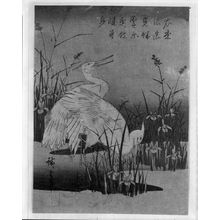
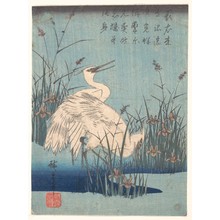
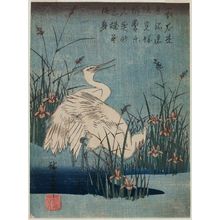
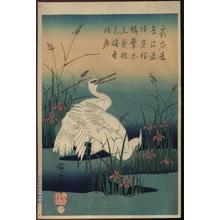
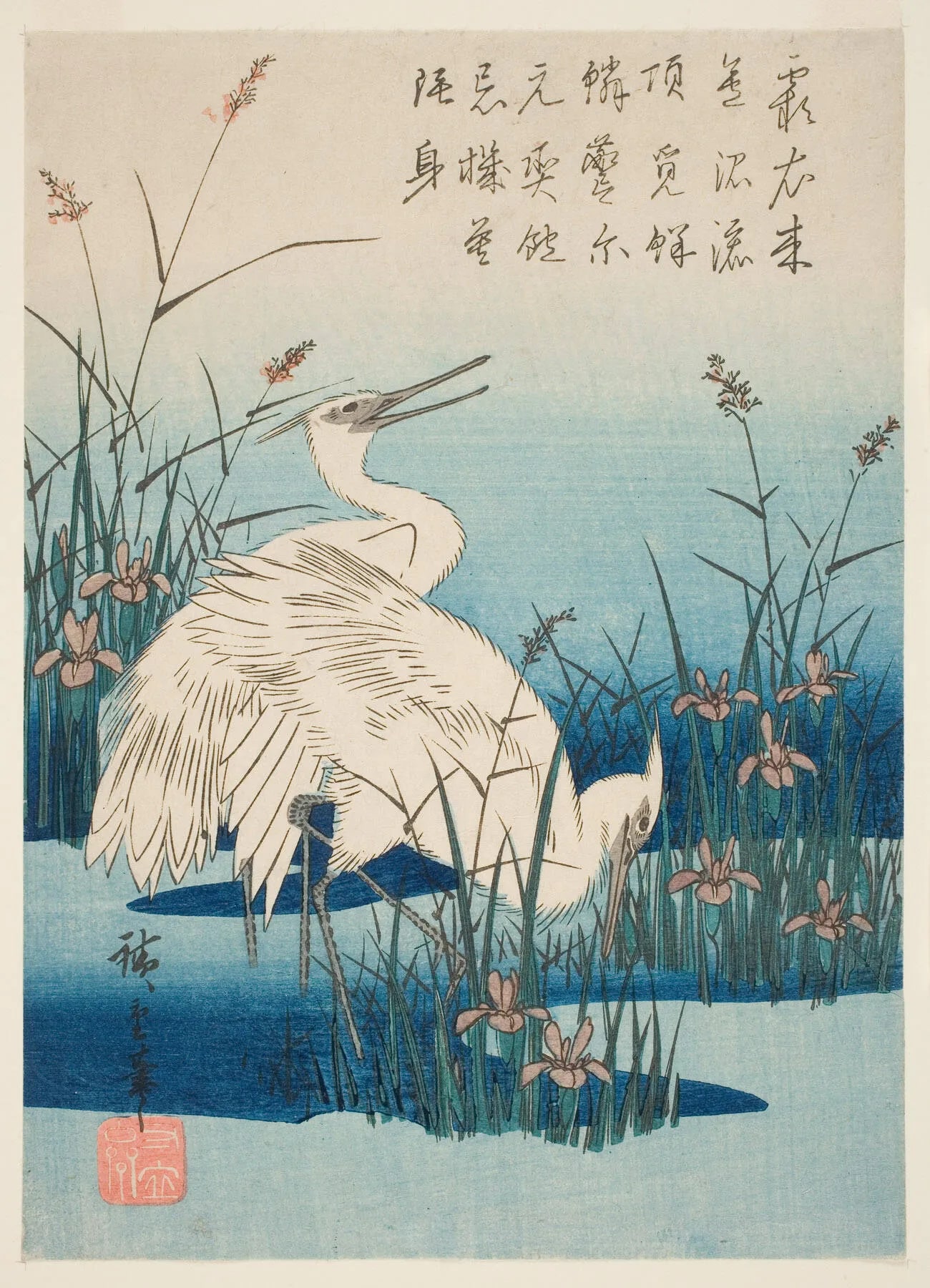
Estampe japonaise "Two Little Egrets Amidst Reeds and Blue-Flag Irises (Hanashobu ni kosagi)" par Utagawa Hiroshige
Artiste :Utagawa Hiroshige
Titre :Two Little Egrets Amidst Reeds and Blue-Flag Irises (Hanashobu ni kosagi)
Date :early 1830s
Détails :Plus d'informations...
Source :Worcester Art Museum
Parcourir toutes les 3 039 estampes...
Description :
Herons and egrets of various species are called sagi in Japanese. Hiroshige depicts a pair of Little Egrets, or ko-sagi, gracefully wading amidst the reeds and irises growing along a riverbank, looking for fish and frogs. Since it is early summer and their breeding season, the birds have long tapering feathers drooping from their napes. The rising shading (bokashi) of the water suggests a warm, hazy afternoon. The complex Chinese-style poem speaks of the herons as inspiring symbols. It suggests that, like the white egrets, we should humbly and persistently seek connection to the Original Source in order to rise spiritually pure out of muddy waters. Japan's most famous early haiku-masters composed verses in a similar spirit about the ao-sagi (Grey heron; Ardea cinere): Sleeping at noon / the body of the heron / poised in nobility. Hiru nuburu / aosagi no mi no / totosa yo Matsuo Basho (1644-94) With evening breeze / the water laps / against the heron's legs. Yukaze ya / mizu aosagi no / hagi o utsu Yosa Buson (1716-83)