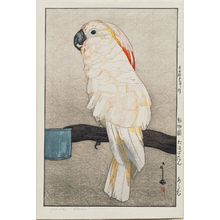
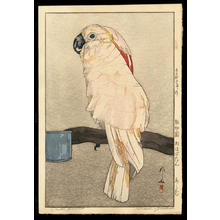
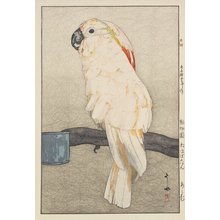
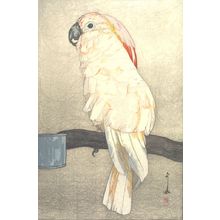
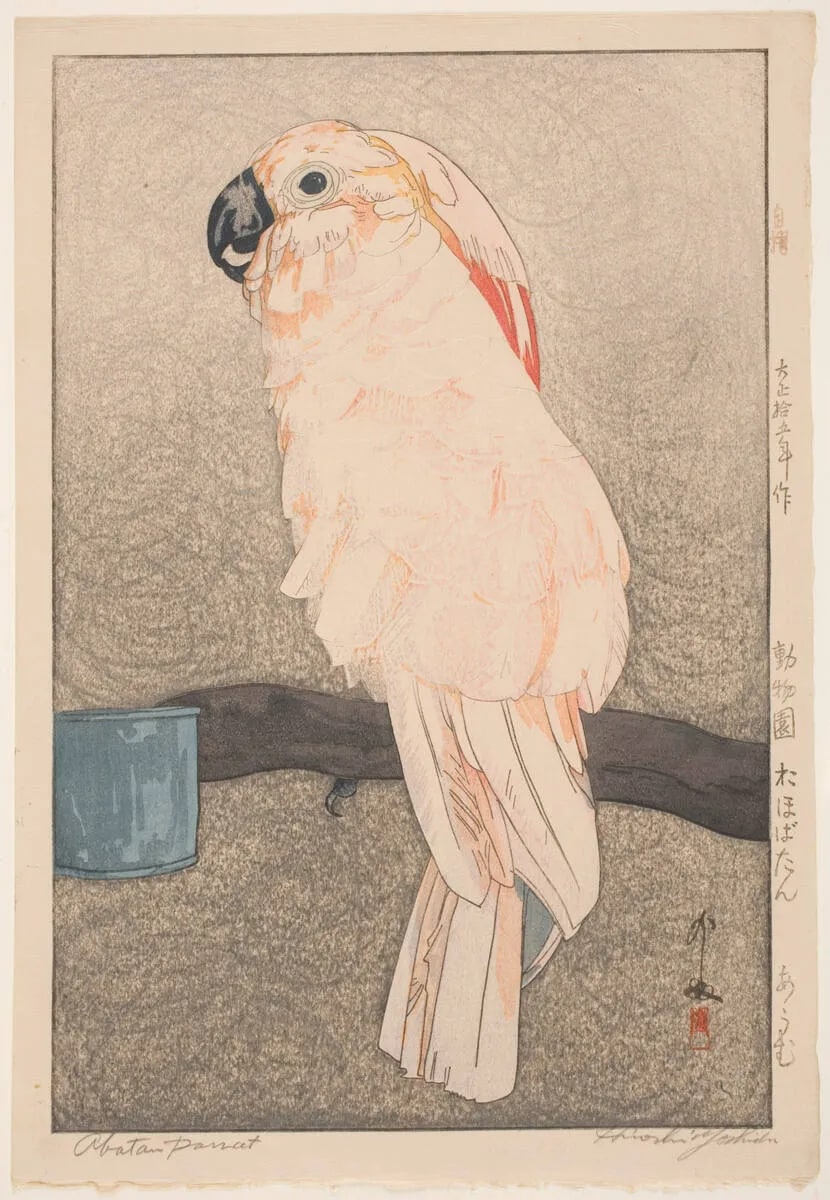
Estampe japonaise "Salmon-Crested Cockatoo (Obatan omu)" par Yoshida Hiroshi
Artiste :Yoshida Hiroshi
Titre :Salmon-Crested Cockatoo (Obatan omu)
Date :1926
Détails :Plus d'informations...
Source :Worcester Art Museum
Parcourir toutes les 3 039 estampes...
Description :
Bird-and-flower subjects, including exotic parrots, were the favorite subjects of several leading early twentieth century Shin Hanga ("New-Print") designers. Hiroshi Yoshida was the only artist who signed and titled his prints in English. He designed this realistic print, along with two other designs of cockatoos and a tiger, as part of a series called "At the Zoological Garden." The Salmon-Crested Cockatoo (Obatan omu), one of the fifty rarest birds in the world, has white feathers tinted with soft pink. The undersides of the head and chest feathers are tinged with yellowish-salmon while the crest has salmon-red inner feathers. Since this cockatoo is presently only found wild on Seram in the Moluccas of Indonesia it is often called the Moluccan or Seram Cockatoo. As indicated by the red seal, "jizuri," in the margin, Hiroshi printed or closely supervised the printing himself. The concave/embossed lines outlining the feathers were created when damp paper was placed on an un-inked block and then rubbed from the back. A baren (bamboo pressing pad) was rubbed in a circular motion to create the lines in the background.