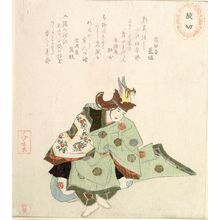
Estampe japonaise "A Bugaku Dancer Performing "Ayakiri"" par Takashima Chiharu
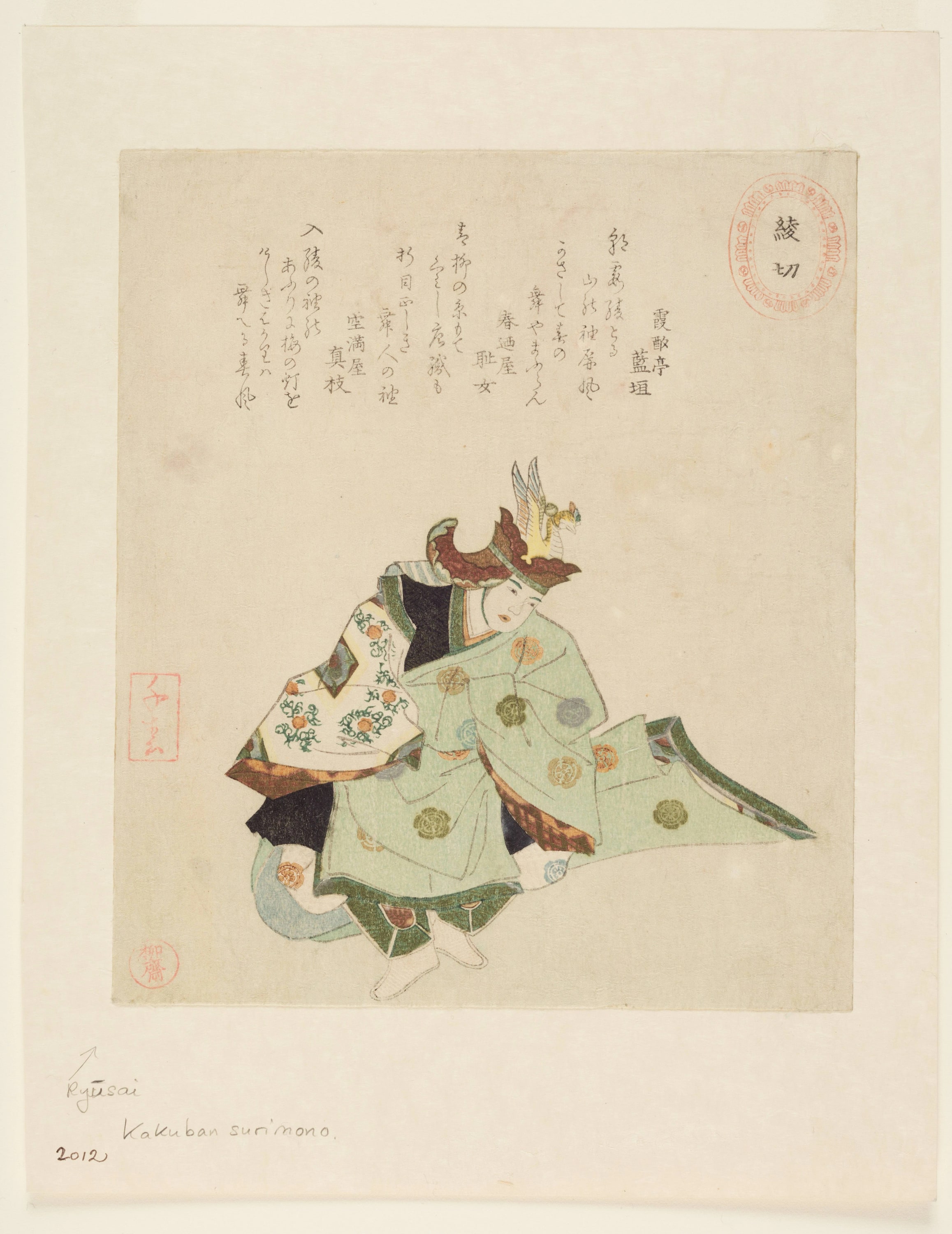
Artiste :Takashima Chiharu
Titre :A Bugaku Dancer Performing "Ayakiri"
Date :about 1819–1820
Détails :Plus d'informations...
Source :Worcester Art Museum
Parcourir toutes les 3 039 estampes...
Description :
The masked dancer performs to the ancient Japanese court music called gagaku. Ayakiri is a dance piece in bugaku. It is a quiet dance, hiramai, of the Right, u-no-mai, introduced from Korea (komagaku) and performed by four people dancing in unison, or by six aligned to form a hexagon. Although the origin of the dance is unclear, the 13c. treatise on bugaku, Kyokunsho, by Koma Chikazane (1177-1242), describes it as using a "female form with white masks." The dance seems to have gone out of fashion, and when revived switched genders. The costume is a standard layered costume, kasane shouzoku, with bird helmet, torikabuto. Even when danced by men, the choreography retains a softness and tranquility. The bugaku is an ancient Japanese court dance. The dancer here depicted wears a court costume and a helmet with a bird crest. Three kyoka poems
Estampes Similaires